
FEBRUARY 2026
Welcome to our regular newsletter for our member organisations and all of their staff.
If you’re receiving this newsletter, it’s because the organisation you work for is part of the Autism Alliance.
New to the Alliance?
We are a national partnership of not for profit organisations that support autistic people and their families. Our members represent a range of sectors, including adult social care, education, community support and more. Together they support thousands of autistic children, young people and adults across the UK.
We work together to share our knowledge, skills and experience in ways which can improve outcomes and reduce inequalities for autistic people - and ultimately help us achieve our vision of a society where autistic people can thrive.
You can view all our member organisations here and find out more about our work more generally on our website. You can find all the dates for our member groups and meetings in the Members’ Area of the website. Some pages are password-protected; please email Poppy (poppy.smith@autismalliance.org.uk) if you need access.
What’s in here for you?
This is our latest monthly newsletter for all staff across the Alliance membership. We hope you find it useful and always welcome your views about what else we could include. This month features:
AUTISM IN THE NEWS: our round-up of some recent news stories about autism.
HAVE YOUR SAY: surveys, consultations and other opportunities to influence.
ALLIANCE NEWS: the latest about what we’ve been doing and have planned for members.
RESEARCH: round-up of the latest research
INFLUENCING POLICY & GOVERNMENT: a summary of our activities to influence Government policy.
RESOURCES: here we share resources about autism.
NEWS FROM OUR MEMBERS: some stories from our member organisations.
WHAT TO SEE…READ…WATCH: some linked to autism, some just recommended by us!
JOB VACANCIES: free listings from our member organisations.
AND FINALLY: a farewell thought or two.
AUTISM IN THE NEWS
Neurodiversity-related tribunal cases double in five years
The number of employment tribunal cases involving neurodivergent conditions has risen 95% between 2020 and 2025. From 2024 to 2025 alone the number has risen by 19%.
Autism and ADHD are the most common ‘conditions’ cited in the tribunal cases, along with dyslexia and Tourette’s syndrome. Dyspraxia and OCD are cited at lower levels.
First look at Government’s proposals for SEND reform
The Government has this week published its long-awaited plans for education and SEND reform. The Autism Alliance has issued a statement with some initial reflections following a first look at the proposals. The first take is that there are some positives, but also some risks - and that a huge amount rests on implementation. You can also read the initial reaction and analysis from Special Needs Jungle here.
Neurodiversity and music
“In 2026, neurodiversity in music isn’t presented as a trend or a lesson, it’s part of how artists write, structure sound, and talk about their own boundaries.”
New Wave magazine looks at how artists and listeners are making and listening to music in 2026 and how neurodiversity is woven into many aspects.
Emirates, the world’s first Autism-Certified Airline, hosted its latest Travel Rehearsal programme in Istanbul. The programme, launched in 2024 in its home hub, Dubai, is part of Emirates’ “Accessible Travel for All” approach. Participants are invited to experience a guided simulation of the complete air travel journey. The session was designed to help neurodivergent children familiarise themselves with the travel process and reduce anxiety associated with sensory-rich airport environments.
Travel Rehearsal Programme with Emirates
Mother and Son Receive Police Award for Neurodiversity Work
A mother and son from Cornwall who have worked with local police for a number of years have been formally recognised for their work.
Together with Devon & Cornwall police the family have delivered webinars, training sessions and working on projects with the aim of improving how the police force communicate, respond and care for neurodivergent individuals.
They have now been presented with a Chief Superintendent’s Certificate.
Oscar-winning film director on neurodivergence and storytelling
“I find that I question sometimes, is it that I am the not typical one or has our world become a little too inhabitable? Is it too loud, is it too bright, is it too fast?” said neurodivergent Oscar-winning director Chloé Zhao at the London Film Festival.
Zhao, director of historical drama, Hamnet, talks about storytelling, Hollywood and how her neurodivergent brain influences her work.
HAVE YOUR SAY
Here you can find the latest surveys, consultations and research participation requests related to autism. Feel free to share them with anyone you think might be interested.
RESEARCH: Study investigating relationship between autism training and care staff’s perceptions of unmet support need
A University of Wolverhampton student is conducting research to find out whether the extent to which autism training is delivered and applied as intended is associated with care staff’s perceptions of unmet support needs among autistic individuals. The research aims to inform improvements in professional development and care provision.
If you are over the age of 18, have completed autism-specific training and are currently supporting autistic individuals in social care you may be eligible to fill in this survey.
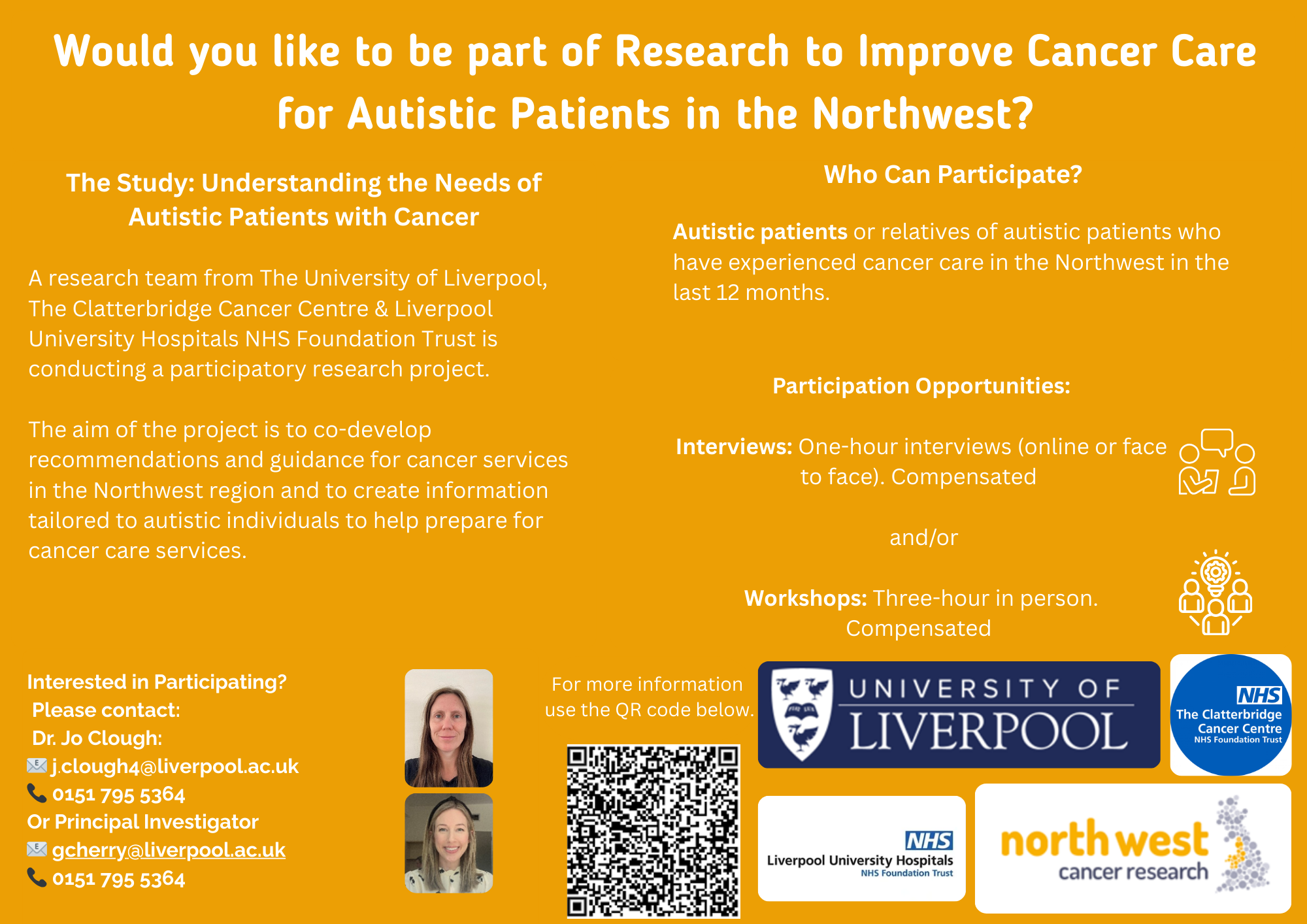
RESEARCH: Understanding the Needs of Autistic Adults with Cancer during Active Cancer Treatment
The aim of this research project is to co-develop recommendations and guidance for cancer services in the Northwest region and to create information tailored to autistic individuals to help prepare for cancer care services.
Participation requirements: Autistic patients or relatives of autistic patients who have experienced cancer care in the Northwest in the last 12 months.
If you are interested in taking part use the button to contact the researcher.
RESEARCH: A University of Sheffield psychology student is researching whether positive childhood experiences moderate the relationship between between adverse childhood experiences and adverse psychosocial outcomes in autistic adults. The survey will close on 20th April 2026 - if you would like to participate then click the button to find out more.
ALLIANCE NEWS
Members’ Meeting, 4th March 2026, Friends House, London
Our next in-person Member’s Meeting will be next Wednesday 4th March, at Friends House in London. As set out in the agenda we have shared, the focus of the meeting will be on creating positive energy at a time when external risks for autistic people and their families, and for our sector, are rising. This aligns with the positive focus of the Autism Alliance’s mission.
Our guest speaker will be Professor Liz Pellicano from University College London, focusing on her work on autistic autonomy and flourishing.
We will then be discussing how we can create neuroinclusive working environments for our staff, another area of positive energy both across the Alliance and in the wider world of employment.
After our normal networking time, focusing on current topics important to our members, we’ll finish by considering ‘what autism acceptance means to me’, leading into World Autism Acceptance Week and helping create a resource showcasing the positive culture and values we see across the Autism Alliance.
We’re looking forward to an excellent meeting next week!
Autism Alliance Professional Groups
As part of the membership of the Autism Alliance, CEOs of member organisations are able to nominate members of staff to attend the professional groups. These groups are a forum for staff to share expertise and provide support for each other, as well as work on specific projects.
Our groups are:

CEOs Group


Communications and Campaigns Group
HR Group

Practice Forum
Sector Sub-Groups
Education and Employment
Health, Social Care, Welfare and Justice
Non-Statutory Services

You can see the meeting dates for all of these groups on the Members’ Area of our website.
Autism Alliance UK Practice Forum
The Practice Forum met in January and heard from Dr Sarah Cassidy at the University of Nottingham, who gave an excellent presentation on the vitally important topic of reducing self-harm and suicidal ideation amongst autistic people. Sarah and her collaborators have developed an adapted safety plan for autistic people, with the feasibility of this being tested through high-standard evidence processes. Some members of the Forum volunteered to connect with Sarah after the meeting to support further testing of these resources.
The Working Group of the Practice Forum is now reviewing an initial draft of our ‘guide to autism specialism in the not-for-profit sector’, and we hope to open this up soon for input from autistic people and their families, and from those connected with service commissioning. We remain on course to publish this resource in the summer.
Autism Alliance UK Communications and Campaigns Group
The Communications and Campaigns Group met in February to discuss aligned activity across the Autism Alliance membership for World Autism Acceptance Week in April. Our theme will be ‘what autism acceptance means to me’, and as well as producing short videos with staff and the people/families our members support, we will be collecting quotes from CEOs and others across the membership. The aim will be to host these on the Autism Alliance website, focusing on WAAW but creating a resource we can keep referring to into the future.
Autism Alliance Speaker Series
The Autism Alliance UK Speaker Series runs throughout the year with an inspiring and informative set of guests.
We were delighted to welcome Charlie Hart (‘Ausome Charlie’), autistic advocate and speaker to deliver our latest Speaker Series talk for Alliance members. The focus of Charlie’s talk was neuroinclusion at work, a ‘hot topic’ for our members and a high-profile area in policy and public affairs. It was a brilliant session, and inspired members to keep exploring both the simple adaptations and the deeper culture changes required to create truly neuroinclusive environments.
SAVE THE DATE: Speaker Series - Alexis Quinn, Wednesday 6 May 2026, 11am-12pm
The next guest in our Speaker Series is Alexis Quinn, qualified counsellor, psychotherapist and autism and human rights campaigner. She also manages the Restraint Reduction Network.
Alexis will speak about her work as an advocate for autistic people, her role within the Restraint Reduction Network and her latest research ‘Relationships of concern’.
RESEARCH ROUND-UP
Will Mandy, Professor of Neurodevelopmental Conditions at University College London has released a paper titled, ‘What is Autism, now?’ The paper looks at the rise in autism diagnoses since the 1990s and explores the reasons behind it.
'“What is Autism, now?”
Bournemouth University have just released the results of a new study led by Dr Rachel Moseley, who is autistic and Principal Academic in Psychology at the university. The study analysed responses from more than 4000 participants to find out what the most important priorities are to reduce the number of autistic people who think about and attempt suicide.
New study calls for faster autism diagnosis to prevent suicides
A new study looked at 2.7 million individuals born in Sweden between 1985 and 2020. Of those 78,522 (2.8%) were diagnosed with autism by 2022. The researchers found that the male to female ratio for autism decreased over time and with increasing age at diagnosis - in 2022, the final year of follow-up, the male to female ratio for autism was 1.2 by age 20.
New study analyses changes in the male to female ratio in autism diagnosis
Report issues warning over neurodivergent children in temporary accommodation
Autism Alliance member, Autistica, were part of the team responsible for this report, created as part of the Sensory Lives Project. The report documents the profound mental and physical health impacts of Temporary Accommodation on neurodivergent children and their families; the challenges posed by inadequate space, safety, and safeguarding; and the significant barriers to accessing education and appropriate SEN support.
You may have spotted this report already in the January newsletter; re-sharing now in case you missed it.
INFLUENCING POLICY & GOVERNMENT
Policy update
The policy landscape continues to develop rapidly, and updates on the latest state of play, and the Alliance’s relevant work, are set out below.
As an overarching point, it’s important to note the rising risk to the public perception of autism, as we have done in previous updates – particularly the risk that autistic people without a learning disability, and those with higher levels of autonomy, are marginalised and written off in policy and services. In a political climate of growing division, with a narrative of ‘overdiagnosis’ increasingly prominent, this is an easy target and should be of deep concern to us all.
In this context, it’s vital we highlight the risks faced by all autistic people because of a lack of support and adaptation of services; and that we keep sharing the evidence that inclusion helps everyone: not just autistic people and their families, but all marginalised groups and ultimately everyone in society.
Focusing on the Autism Alliance’s three core priorities for 2026:
· On the future of autism assessment, we are now working on a draft of the short public policy report we aim to publish in April/May, as an input to Government decision-making and to the independent review of mental health, ADHD and autism. Drawing on the latest evidence, the report will make the case for a fundamental shift in how public services identify and meet the needs of autistic children, young people and adults, to unlock better outcomes and support more cost-effective spending of scarce public funds. The report is being shaped by a group of leading researchers and clinical figures, alongside representatives from national autism organisations. We have also recruited a reference group of autistic adults and parents/carers who are providing feedback and contributions alongside the core group.
· On the National Autism Strategy, we continue to work with other national autism organisations to exert pressure on the Government to develop a new Strategy which supports systemic change, in line with the recommendations in the ‘Time to deliver’ report from the House of Lords. This will include focusing on the Autism Act, which, as a landmark social inequality law represented huge progress in autism awareness and the acknowledgement that autistic people face specific barriers which require a specific response.
· On autism specialism, we are now working with the Autism Alliance Practice Forum on a draft ’guide to autism specialism in the not-for-profit sector’. This includes a ‘model’ identifying the key features of autism specialist organisations, including contemporary knowledge of autism and neurodivergence, a needs-led culture, a focus on quality of life, and continual learning at all levels. The next stage will be to open this up for feedback and contributions from autistic people and their families, and from those representing service commissioning. We aim to publish this resource in the summer.
Outside these priorities, the main news in policy in England is this week’s launch of the Schools White Paper and plans for SEND reform. It is an important moment in policy, given the scale of the challenge and level of public interest, and for the Government given the risks involved. A useful headline summary of the Government’s plans is here.
On the positive side, the Government seems to have listened to some of what children, young people, parents, and charities have said. The focus of the plans is on identifying and meeting needs as the basis for learning, with new legal responsibilities for schools, and there is consideration of phasing in the reforms to manage against inadvertent negative outcomes. The expertise of specialist organisations, like those in our sector, is acknowledged. And there is investment in the crucial specialist health workforce that can support schools.
However, there remain significant risks, most clearly around Education, Health and Care Plans and children who face significant risk of harm but are not deemed to have the ‘most complex needs’, which could include autistic children without a learning disability. There is also a risk that the underlying drive to cut costs falls disproportionately on specialist organisations, particularly in the independent sector.
The plans rightly see reform as a decade-long process: this is essential given the scale of the problems created by previous Government policy. However, parents and children will need to see benefits well before that point, so the upfront investment the Government plans will need to work hard. There is also the chance that the reforms are dropped if a different Government is elected in 2028.
The Autism Alliance has provided some initial reflections on a first look at the proposals. Overall, to see a positive transformation of education for children with SEND, there will need to be a substantial change in culture, led from the very top by the Government and education leaders. We will be giving the plans a more detailed review in the week ahead.
There will now be a 12-week public consultation on the proposals, ending on 18th May, to which individual Alliance members will want to respond. The Alliance will also submit a response. To support this, we are hosting an initial call with CEOs next week to discuss the White Paper and SEND reform plans and will then consider further discussion calls.
Alongside the White Paper the Neurodivergence Task and Finish Group report was also published – a long time after it was first submitted to the Government last summer. The Autism Alliance was part of the Group, and it is positive to see some of the recommendations reflected in the Government’s plans, particularly the importance of a needs-led system.
Other developments in policy relevant for our work are:
· The Health and Social Care and Education Select Committees of Parliament have launched a joint inquiry into the mental health of children and young people. This inquiry will examine mental health support and services provided in education and community settings, available to children and young people up to the age of 25. The Committees wish to understand how this provision is integrated with specialist Child and Adolescent Mental Health Services (CAMHS), acute and other statutory NHS services. The Autism Alliance will respond to this inquiry highlighting the vital importance of adapted mental health provision for autistic children and young people, the availability of this provision, and ensuring it is connected into strong pathways of support from the earliest years of life. There will be a link here to the report we are producing on the future of autism assessment.
· On social care, we await an announcement about the next phase of the Independent Commission on Adult Social Care led by Baroness Louise Casey. The Local Government Finance Settlement has been published, setting out the Government’s approach for the next three years. Although additional funding is available, analysis suggests this remains insufficient to cover known pressures across social care, again reinforcing the importance of a new approach to funding social care in the future, something it is hoped Louise Casey will consider. This useful paper on funding from Leonard Cheshire is worth a read.
· On welfare policy, the Timms Review of Personal Independence Payment has had its first meeting and is developing plans for wider engagement. The co-chairs of the Review have now announced the members of their lived experience steering group. There has been no update so far from Alan Milburn’s Review focusing on young people Not in Education, Employment or Training (NEET), although he was interviewed by the BBC last weekend. And the National Audit Office has issued a report on Access to Work, highlighting the very long delays experienced by those trying to access this support.
RESOURCES
Here we share a range of new or recent resources and opportunities, focusing on autism, which our members might find useful.
The Neurocrats: Civil Service Lives
How do you get to be a Director General if you are dyslexic? Can being autistic help you lead teams through a crisis? What is it like to discover you are neurodivergent a long way into your Civil Service career?
The Neurocrats is a podcast that explore stories and experiences that help us understand how neurodivergent people in the Civil Service work, live, and thrive.
Each episode is 20 minutes long, so perfect for a listen on your commute or over lunch.
The Autistic and OK toolkit from Alliance member, Ambitious about Autism, is a free downloadable toolkit of resources which equips secondary and specialist schools to support the wellbeing of their autistic pupils. The programme centres on a series of peer-led sessions, delivered by older autistic pupils to their younger peers with support from school staff.
This term teachers, SENCOs, school leaders and education professionals are invited to attend an online information session and panel discussion to learn more.
The session will take place on Wednesday 18 March 3:30-4:30pm on Zoom.
Autistic and OK
Understanding Autism and Dementia
Alliance member Autistica worked with Dementia UK and King's College London to co-create public information guides on autism and dementia.
The guides offer clear, practical guidance tailored to the needs of autistic people with dementia and those who support them. Also in development is a guide for health and care professionals to know more about autism and dementia, to provide more inclusive care and better support.
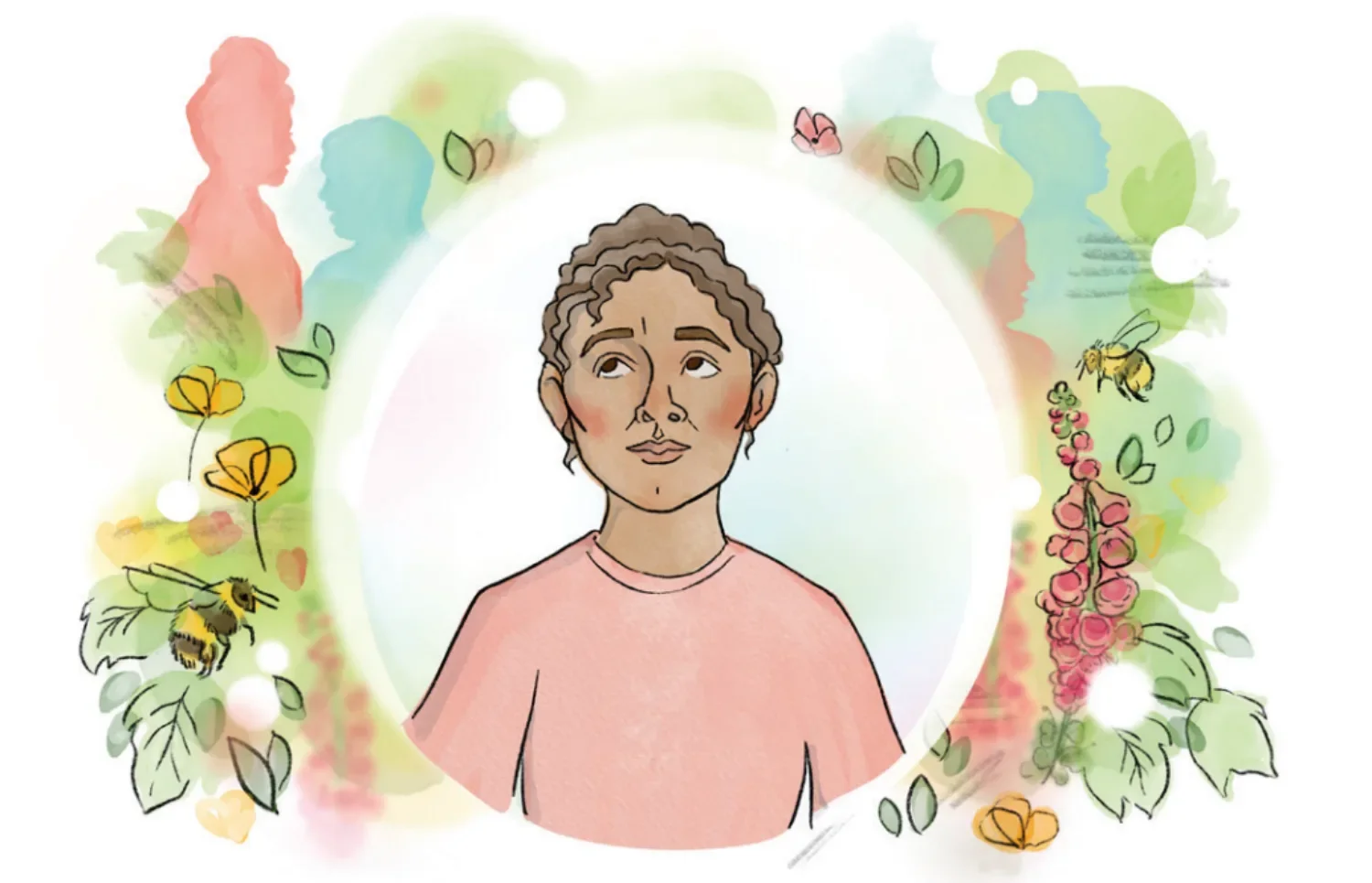
Autism at school webinars by Priors Court
Alliance member Priors Court is offering two webinars on the following topics:
Autism at school - Top structure tips to help the world make sense (Thursday 15 April)
Navigating a sensory world - supporting autistic children in school (Thursday 29 April)
The sessions are online, free and lasting an hour. Anyone is welcome to attend but the sessions may be most useful for:
· Teachers and other school staff who work with SEN in both mainstream and special schools
· Parents and carers of autistic young people with complex needs
· Anyone supporting autistic young people with complex needs
Connected for Autism - The Greater Manchester Neurodivergence Collective Event
April is Autism Acceptance Month. To mark the occasion, the Greater Manchester Neurodivergence Collective is hosting a special autism-themed event on 16 April, 10:00am–3:00pm at HOME, Manchester.
The event is open to anyone working in Greater Manchester who would like to learn more about local autism support services. The GM ND Collective brings together voluntary, community and social enterprise (VCSE) organisations that support neurodivergent children and young people across Greater Manchester. Its purpose is to showcase good practice, highlight new service developments, and create opportunities for collaboration, networking and shared learning, while raising awareness of the challenges faced by neurodivergent communities.
NEWS FROM OUR MEMBERS
Each month we will share news from our member organisations. Feel free to send your stories to us via email.
Autistic young people and parents are sharing their stories of absence from education in this new campaign calling on the Government to tackle the problem.
Over a third of autistic pupils have missed up to a month or more of school since the start of the academic year in September. The biggest cause for non-attendance was mental health issues (62%), followed by issues with physical health. A fifth (20%) were out of school because their school place was not suitable.
Absence Notes: new campaign reveals why so many autistic pupils struggle to attend school
Ambitious about Autism
Autism Hampshire’s Oliver McGowan Training Team has been named the winner of the Inclusion, Equity and Diversity Award at the Hampshire Changemakers Awards 2026.
The training is delivered by a team of 4 facilitators and 10 autistic and learning-disabled trainers, who draw on their own lived experience to highlight the barriers autistic people face when accessing health services. The team also co-produces and updates the training materials, ensuring sessions reflect real-life experiences and current research.
Matt, who is both a resident of Autism Hampshire’s supported living service and one of the Olive McGowan trainers, talks about his experience delivering the Oliver McGowan training in the video below.
Autism Hampshire team wins Inclusion, Equity and Diversity Award
Autism Hampshire and Avenues
Autism Hampshire awarded Hampshire & Isle of Wight Autism and ADHD Support Contract
Commissioned by the NHS Hampshire and Isle of Wight Integrated Care Board ICB, the new service will go live on 1 April 2026 and run for three years, with an optional one year extension.
The new service model places partnership working and lived experience at its core, bringing together organisations and people with lived experience of autism and ADHD to co design, co deliver and co evaluate all elements of the service.
Hamelin
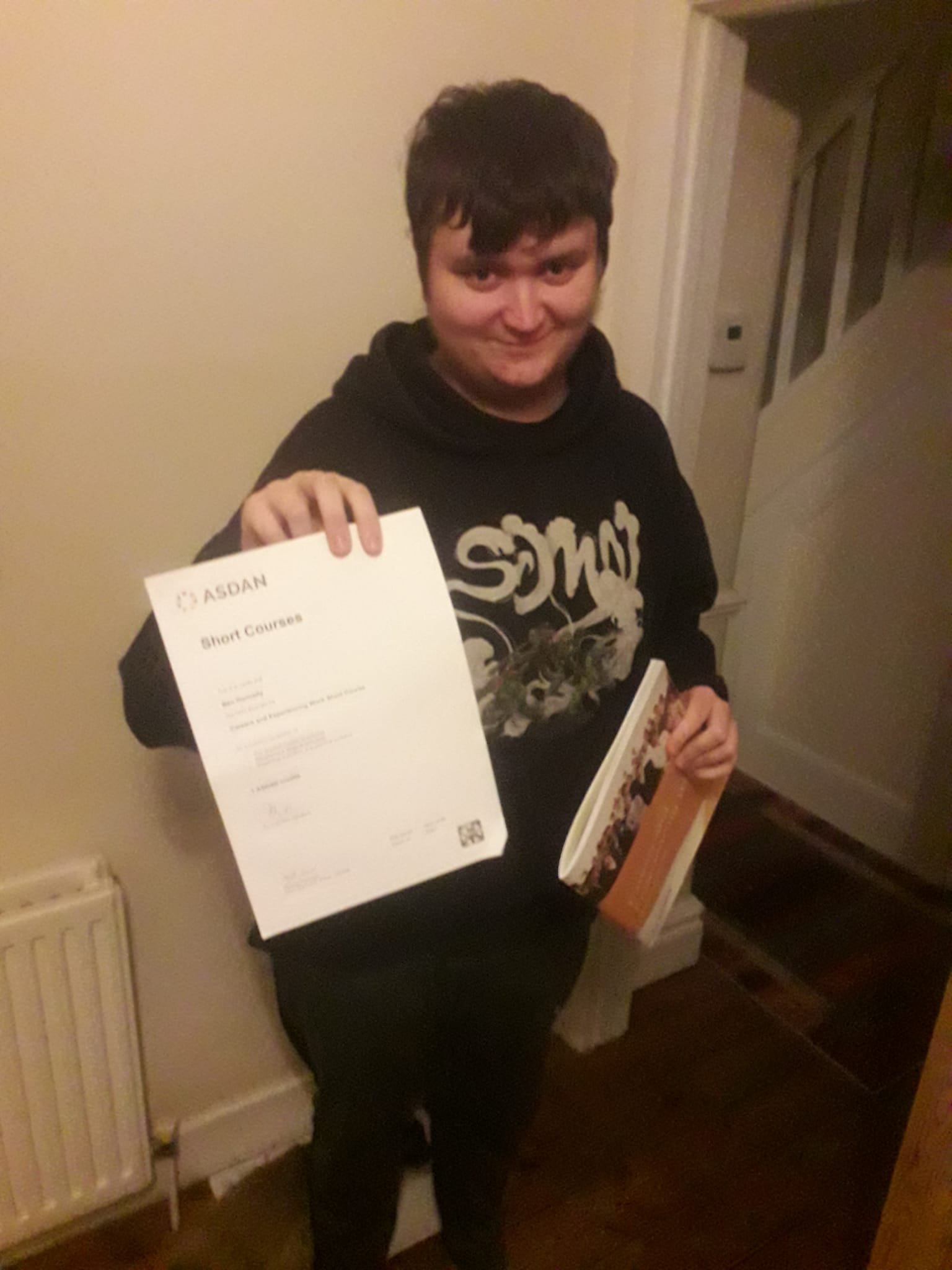
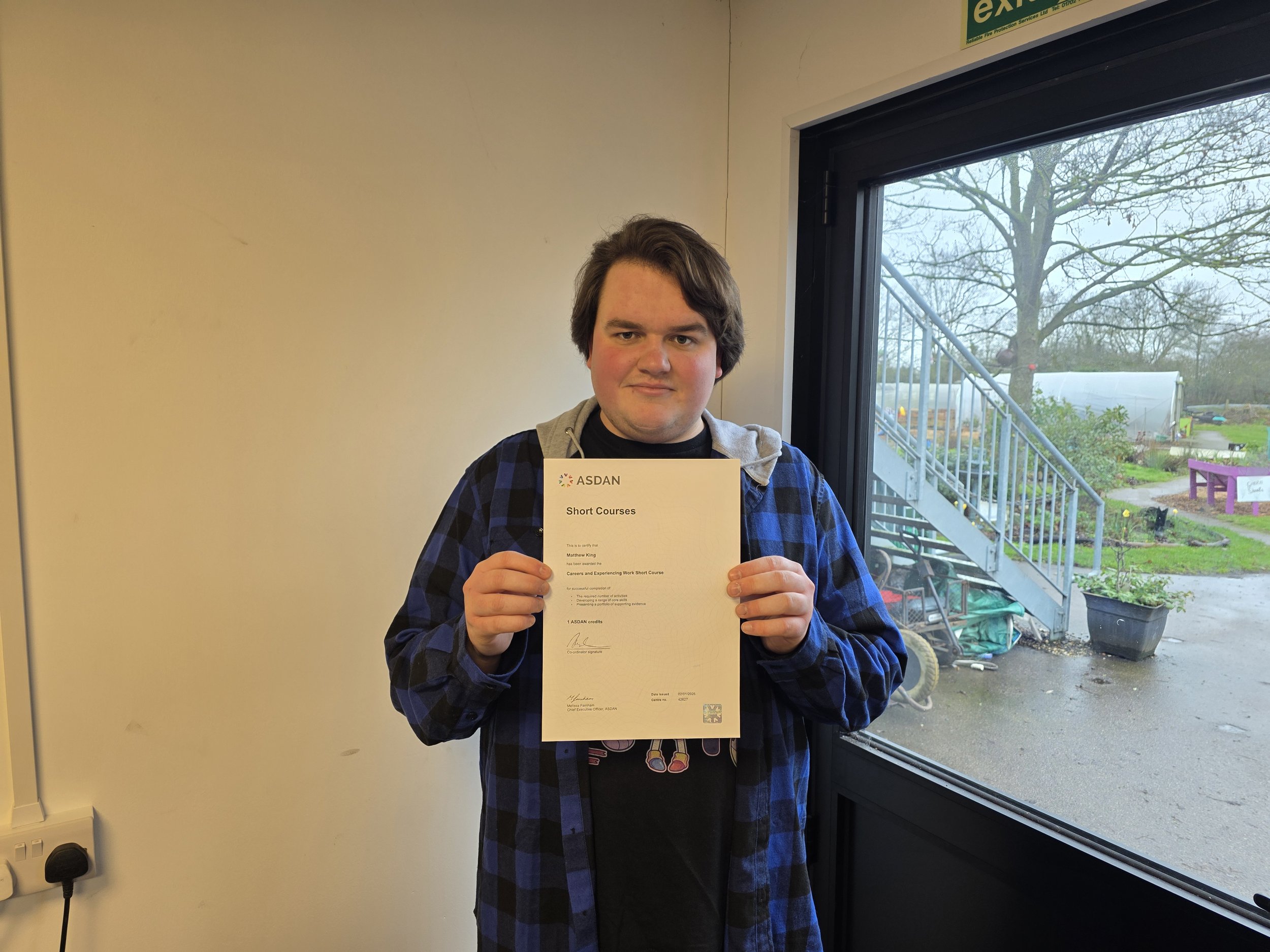
Major milestone after two people supported have become the first to complete an ASDAN qualification at Hamelin
Ben and Matt have successfully passed the ASDAN Careers and Experiencing Work Short Course, marking the first completed courses delivered at Hamelin since it became an accredited ASDAN centre. Their achievement represents an important step forward in creating meaningful learning and progression opportunities for autistic adults and people with learning disabilities.
Following the success of Ben and Matt, more people at Hamelin are now working towards ASDAN qualifications across a range of subject areas. Current courses include Computing, Careers and the World of Work, Environmental and Horticulture, Catering, and Volunteering.
North East Autism Society
Hidden Barriers: Autism and Airports picked up by Jet2
The first film in the Hidden Barriers series - Autism and Airports - has been picked up by the UK’s biggest holiday operator, Jet2Holidays, who have included it in their assisted travel guide which goes out to 300,000 passengers a year. The film can be seen on YouTube at this link.
The next documentary focuses on GP surgeries, which can be difficult for autistic patients and their families. Documentary-makers want to hear from more autistic patients, and parents/carers of autistic children, and have created an online survey asking about their experiences.
PDA Society
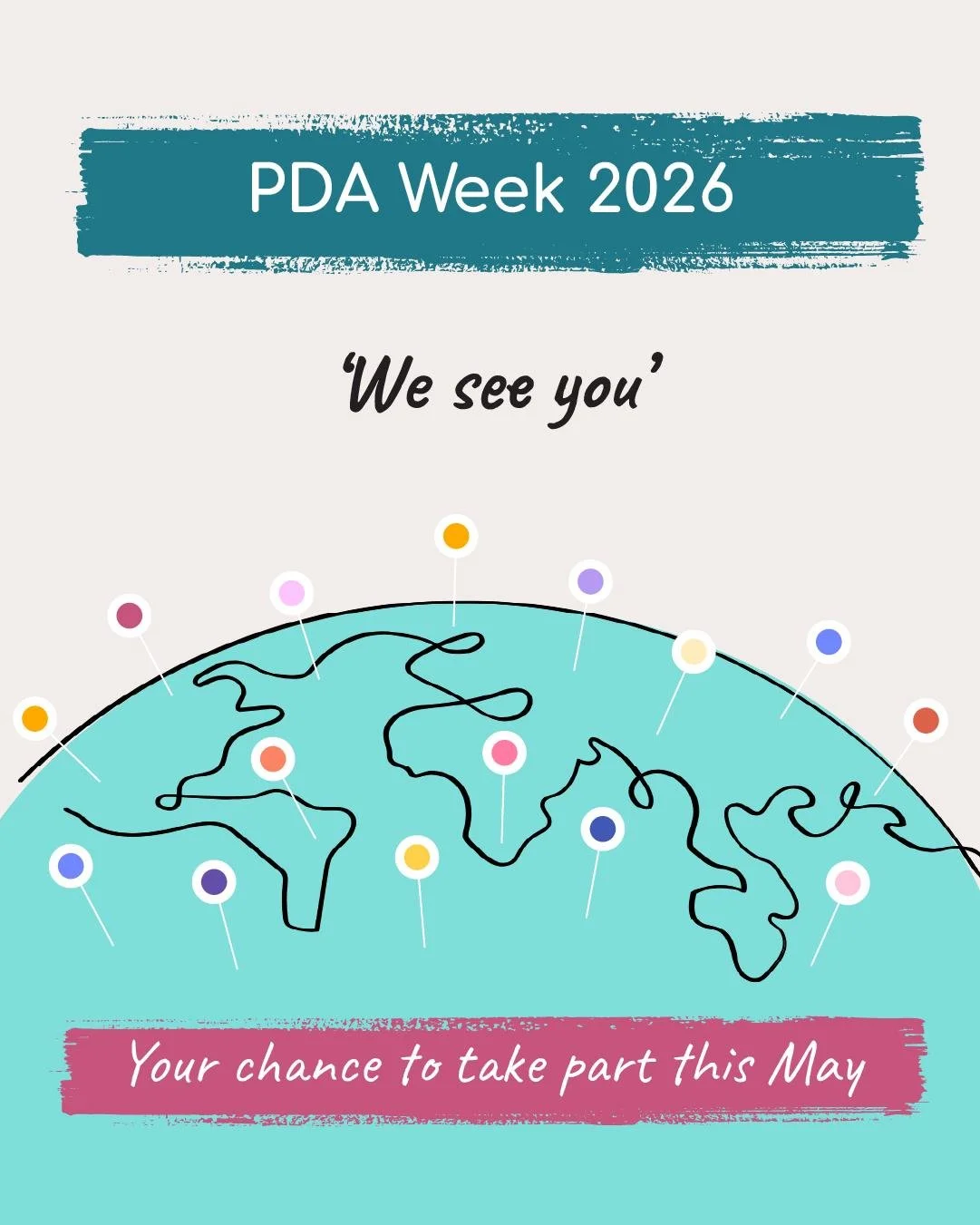
This year during PDA Awareness Week PDA Society are partnering with @pdanorthamerica. With your help, they are going to create an interactive map to help connect PDAers from all over the globe.
Research around the prevalence of PDA is extremely limited, but the one study we have suggests around 1 in 5 autistic people could be PDA. That means globally there are likely to be millions of PDAers around the world, potentially struggling to understand their experiences and to find role models like them.
As more and more people are to coming home to their neurodivergence, this is our way of saying that PDAers are everywhere. You are not alone. You belong.
You can take part by clicking on the button below.
PDA Week 2026 - 18-24 May
PDA Society run regular live comedy events throughout the year, supported by incredible comedians donating their time and talent. All the money they raise from ticket sales and donations goes directly towards creating new resources and providing more one to one support for PDAers and their families.
The next gig is streamed online and can be watched at a time and place to suit you - it will be available from 18 March and the incredible line up is hosted by Alistair Barrie.
Comedy in aid of the PDA Society
Sheila Coates Foundation
Creating sensory and safe spaces for autistic students in mainstream schools
Sheila Coates Foundation is excited to share progress from our autumn 2025 project, supporting mainstream secondary schools and colleges to create sensory and safe spaces for autistic students in partnership with our academic partner, the Autism Centre for Education and Research at the University of Birmingham.
Forty mainstream schools and colleges across England have joined a Community of Practice, bringing together teachers, teaching assistants, and leaders to embed sustainable, meaningful change for autistic learners. Key focus areas include: turning intentions into day-to-day action; clarifying what is implemented in classrooms and routines; balancing bottom-up engagement with top-down leadership; and designing structures for genuine coproduction with autistic young people.
The commitment from schools is inspiring. Sensory/safe spaces are increasingly becoming part of everyday practice, showing the power of collaboration to create lasting positive impact on the education of autistic young people. As the project develops further we will keep members informed of new insights and findings.
Significant endowment from British entrepreneur and philanthropist Ben Delo
Ben Delo, commenting on the endowment, ‘I was diagnosed with Asperger’s syndrome, a form of autism, aged 11, and the support I received from Sheila Coates was genuinely transformative to my education and future outlook. This Foundation, established in her memory, has had an incredible impact since its inception and I am looking forward to watching it grow from strength to strength in the coming years.’
WHAT TO SEE…READ…WATCH…
Small Prophets, BBC iPlayer

Small Prophets is the latest creation to emerge from the exquisite mind of Macenzie Crook. I say emerge, because, like The Detectorists beforehand, Small Prophets percolated for quite some time.
I suspect Mackenzie Crook has no idea quite how brilliant his work is. Why wouldn’t you spark a sitcom idea from a casual reading of Paracelsus, the 16th Century alchemist? And it is this marriage of the extraordinary with the entirely mundane that makes Small Prophets so stinking adorable. An almost microscopic examination of the mundanity of life - the thrill of two Shredded Wheat still being attached to one another, the search for a bucket – sits quite easily next to the absolute extraordinariness of existence – a meteorite from space, a book about birds worth several million pounds, being in love for ever.
The cast is perfection. I can’t imagine any actor could say no. Mackenzie Crook himself has a small role, Pearce Quigley takes the lead with legendary Michael Palin playing his father and Sophie Willan a neighbour.
Who or what are the small prophets? Well, I won’t give that away, but if you want a beautiful, weird and profoundly moving televisual experience, go ahead and find out for yourself.
JOB VACANCIES
Autism East Midlands provides a wide range of care, support and educational services to meet the needs of autistic individuals of all ages, and their families and carers, across the East Midlands.
Location: East Midlands
-
Salary: £12.89ph/£24,800 per annum
Hours: Full-time, part-time and casual are available
Deadline: Saturday 28 February
Location: Heanor, Mansfield Woodhouse, Northampton, Nottingham, Retford, Worksop.
You will be positively supporting people by providing holistic support including personal care, medication administration, integration into the local community and managing their anxieties, which they may communicate through distressing behaviour.
More information here.
-
Salary: £52,800 - £63,216 per annum
Hours: Full-Time (37 hours)
Deadline: Friday 27th February
Location: Mansfield
As the registered manager you will be responsible for the maintenance of registration standards as laid down in the Children’s Home Regulations and Care Standards 2015 and as regulated by OFSTED.
More information here.
-
Salary: £32,916 - £45,352 per annum
Hours: Full-Time (Term Time Only)
Deadline: Sunday 1st March
Location: Nottingham
As part of a supportive staff team, you will have a passion for improving the lives for autistic pupils and their families. You will have a commitment to planning and delivering engaging lessons and you will engage with a wide range of professionals, including therapists to ensure all pupils are reaching their full potential.
More information here.
-
Salary: £24,800.36 per annum or £12.89 per hour
Hours: Full-Time, Part-Time and Casual positions available
Deadline: Saturday 28th February
Location: Chesterfield, Derby, Swadlincote
This role will get you supporting autistic people with a variety of activities that they enjoy and encouraging independent living skills.
More information here.
-
Salary: £32,916 - £45,352 + £2,787 SEN
Hours: Full-time, but part-time may be considered
Deadline: Sunday 1st March
Location: Nottingham
We offer small class groups, favourable staffing levels and excellent opportunities for training and professional development. The school has an Ofsted rating of Good. The school is committed to safeguarding and promoting the welfare of children and young people.
More information here.
-
Salary: £31,156.30 per annum
Hours: Full-Time, 37 hours per week, all year round
Deadline: Thursday 26th March
Location: Braithwell
We’re looking for a dedicated, proactive, and caring School Site Manager to join our school community. This is more than a job; it’s a chance to make a real difference in the lives of our students and staff by ensuring our site is safe, welcoming, and well-maintained every single day.
More information here.
-
Salary: £24,573.31 per annum or £14.56 per hour
Hours: Full-time, part-time or casual positions available
Deadline: Sunday 1st March
Location: Nottingham
As a qualified Teaching Assistant, your role will be to support our teachers in providing and developing a high-quality education to address the individual needs of pupils..
More information here.
-
Salary: £12.89 per hour
Hours: Casual
Deadline: Saturday 28th February
Location: Retford, Whitwell, Worksop
The Waking Night Support Worker will be responsible for the welfare and security of the service users and building through the night. The successful applicant will need to liaise with care staff and contact the on-call manager during the night should the necessity occur.
More information here.
-
Salary:
Hours:
Deadline:
Location:

Everystory provide support to people with learning disabilities and/or autism. Support services include registered care, supported living, outreach, employment and housing support and Community Day Care.
Location: South-East London
-
Location: Deptford, London
Deadline: Monday 16 March
EveryStory, previously known as Aurora Nexus, is a fast growing, innovative and forward-thinking health and social care charity based in South East London, supporting individuals with learning disabilities and autistic people.
The charity is at a pivotal moment in its growth and development, having recently launched our 2025-28 Strategic Plan.
We are excited to be recruiting new trustees to join our creative and committed group of board and executive team, in leading the charity through a truly exciting time of growth and development.
As a trustee, you will help with delivering the organisation’s strategy, core values and objectives. You will work closely with the CEO, providing support and guidance where needed, to ensure the safe and effective day to day delivery of the charity’s strategic and operational objectives.
You will be an ambassador and advocate for the work carried out across EveryStory, using your own skills, knowledge and experience to both promote and support its work.
We are currently looking for up to four trustees. As our trustee you will be central in ensuring the adherence to EveryStory’s Strategic Plan, setting our future direction with your skills and governance, and enabling us to lay strong foundations for the future.
We are committed to maintaining our highly effective Board to ensure our organisation remains contemporary and relevant. We want to be seen as an exemplar support provider, and this is mirrored in our Outstanding CQC rating.
At present we are looking for trustees with experience in these particular fields:
· Financial experience within health and social care
· Local commissioning (of social care services)
· Marketing and Communications
· Charity fundraising
Full recruitment information pack available on our website: https://everystory.org.uk/careers
For an informal chat or for more information, applicants can email the Board Chair: james.radford@everystory.org.uk or the CEO: ceooffice@everystory.org.uk
AND FINALLY….
A closing word from our Director.
World Autism Acceptance Week in April comes at an important time, with risks to the public perception of autism continuing to grow.
Acceptance is more than just a word or a tick in a box. It is a way of being in the world, that says: I see and respect you as an equal.
Looking around us, across many areas of society it can seem like acceptance is in short supply. Yet without acceptance, we have little chance of addressing the challenges of our modern world.
Our sector has acceptance as its DNA. We accept others without question, because it is the right thing to do. With unconditional positive regard and curiosity, we strive to understand others so we can help them to thrive. And the work of our sector shows that when you get this right, people have better lives and money is better spent.
It is a lesson many in our world would do well to learn.
