
Welcome to the Autism Alliance UK’s supporter newsletter.
If you’re receiving this newsletter, it’s because you have signed up as an Autism Alliance UK supporter. If you’d like to unsubscribe, click here.

What is the Autism Alliance UK?
The Autism Alliance UK is the national body for specialist not for profit organisations that support autistic people and their families.
We work together to share our knowledge, skills and experience in ways which can improve outcomes and reduce inequalities for autistic people.
Our vision is a society where autistic people can thrive and live their lives in their communities.
To achieve this, we work with a wide range of people and organisations to influence Government policy and build a vibrant, supportive community of autism specialist organisations providing services and support.
You can read more about our work here and our members here .
In this newsletter:
Autism Alliance News – an update on the work we have been doing, including influencing and member news
Autism in the News - our round-up of some recent news stories about autism
Things you can do – ideas for actions you could take to help create a more inclusive world
Tell us what you think – share your views about how public services could better meet autistic people’s needs
Autism Alliance News
The Autism Alliance UK has been taking forward a range of work to support positive change for autistic people and their families.
Bee Neuroinclusive Fringe Event at Labour Party Conference
At this year’s Labour Party Conference in September, the Autism Alliance UK hosted a fringe event on neuroinclusion at work, with guest speakers Andy Burnham, Mayor of Greater Manchester, and Howard Dawber, Deputy London Mayor for Business. A particular focus was the excellent Bee Neuroinclusive Code of Best Practice in Greater Manchester, which was launched in October as part of the GM Good Employment Charter. Read more about the fringe event here and find the Bee Neuroinclusive Code of Best Practice here.
DfE Neurodivergence Task and Finish Group
The Autism Alliance UK was part of an independent group commissioned by the Department for Education in England to provide advice to Ministers on how to meet the needs of neurodivergent children and young people in mainstream education. The group’s report should be published in due course, and we are hopeful this can influence the direction of education policy.
House of Lords Autism Act Committee
The Autism Alliance UK gave evidence in-person and via submission to the House of Lords Special Inquiry Committee on the Autism Act 2009. This focused on the need for systemic change, which was a key feature of the Committee’s final report. The next step is for the Government to respond to the report, which it must do within two months.
Independent Commission on Adult Social Care
Baroness Louise Casey is leading an Independent Commission to make recommendations on the future of adult social care in England. Following the Commission’s initial evidence-gathering phase, the Autism Alliance UK hosted a roundtable for people with lived experience and parents/carers to provide feedback directly to the Commission team.
The Economic Case for Prioritising Autism in Policy and Reform
Together with Autistica, the UK’s autism research charity, the Autism Alliance UK commissioned a team at the London School of Economics to summarise high-standard economic evidence relating to services and supports for autistic people and their families. The LSE’s report sets out ten approaches with strong evidence of effectiveness and cost-effectiveness, and should be an important reference point for policy development. It is particularly relevant to the Government’s stated aim to shift from crisis to prevention in healthcare and its focus on inclusion in education.
Autism specialism in the not-for-profit sector
Reflecting a need amongst service commissioners for clearer information about not-for-profit organisations that support autistic people and their families, the Autism Alliance UK is working with its member charities to explore the characteristics of autism specialist organisations. With wide-ranging evidence of unmet need, it is vital that both commissioners and policymakers understand the importance of services that specialise in supporting autistic people and their families. We hope to produce a resource on autism specialism in 2026.
Tackling misinformation about autism
Unfortunately, there is currently a great deal of misinformation and misunderstanding about autism, not always helped by Government and the media. The Autism Alliance UK’s information sheet sets out the facts, and reinforces the fundamental importance of language in shaping an inclusive, accepting and supportive society and public services.
A stronger not-for-profit sector supporting autistic people and their families
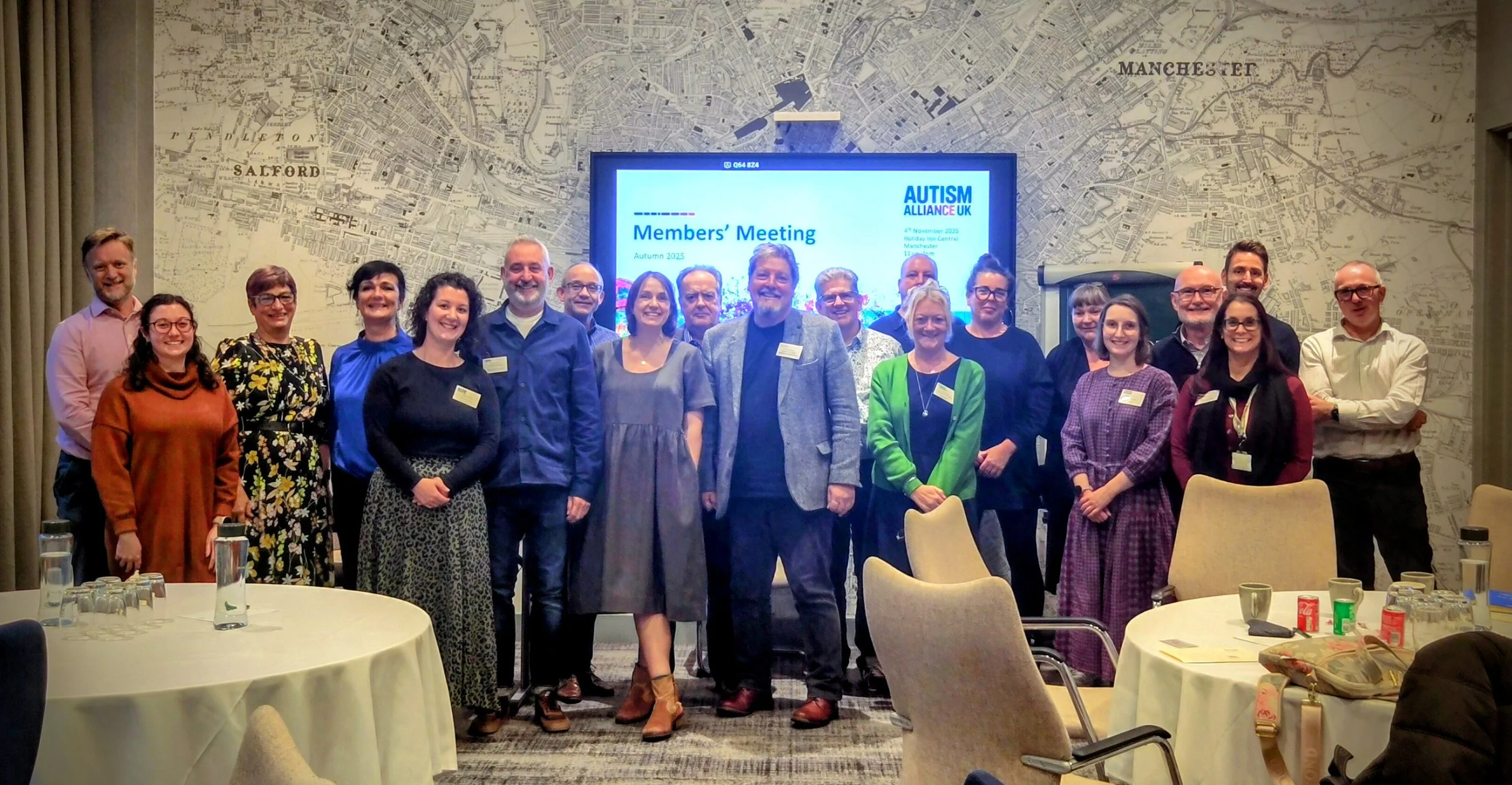
The Autism Alliance UK holds four in-person meetings each year for its member organisations across the UK, enabling the sharing of information and expertise. Recent guest speakers have included Baroness Browning, member of the House of Lords Special Inquiry Committee on the Autism Act 2009, Simon Bottery from The King’s Fund and Professor Jonathan Green from the University of Manchester.
You can read more from the Autism Alliance UK in the reports we have published since 2023:
Real Change for Autistic People and their Families - establishing the key point that despite dedicated legislation and successive Government strategies, outcomes for autistic people have not improved as they should, because the barriers are systemic.
Breaking Point - revealing the extent to which adult social care is failing to recognise and meet the needs of autistic adults in England, all too often leading to crisis.
Doing the Right Thing - making recommendations to the Government around two of the ‘deep barriers’ holding back progress for autistic people and their families: strengthening accountability and developing a supportive culture.
Autism in the News
Powerful short film explores how courts can fail autistic witnesses
A Witness is inspired by the real experiences of autistic witnesses giving evidence in courts, as told to researchers in the Centre for Applied Autism Research at the University of Bath.
The research investigated how courtroom procedures affect autistic people, and whether current adaptations truly support their ability to give evidence and access justice.
The film premiered at the Norwich Film Festival last weekend.
What autistic people really think about the word ‘neurodiversity’
Until recently, no one had asked neurodivergent people themselves what they thought about the language used to describe them. So a team at the University of Liverpool decided to do just that. They surveyed more than 900 neurodivergent adults across the UK and found a mixture of positive and negative views about words like “neurodiversity” and “neurodivergent”.
One finding stood out in particular: how often the language of neurodiversity is used incorrectly.
Government’s Schools White Paper delayed - but what does this mean for SEND parents?
Many families are now still in limbo, uncertain what is to come in the white paper and how this may affect their family. They now have to wait until next year to receive any answers.
Ambitious about Autism CEO and Chair of the Autism Alliance UK, Jolanta Lasota gives her response to this news in the article linked below.
The haulage industry and autistic people - a match made in (forklift) heaven?
In the second in a series of two articles, we hear stories from two autistic adults and their bosses on how understanding and teamwork can mean success for both employees and employers.
With accommodations such as doors and windows for a forklift truck to reduce sensory overload, in return for 99.8% scanning efficiency (better than any machine!) and efficient truck loading due to the autistic worker “seeing it in grids, so everything has its place”, these stories show just how well jobs can work, with a little bit of understanding and collaboration.
Belfast International Airport gains Autism NI Impact Award
Working closely with Autism NI, the airport has introduced a comprehensive action plan designed to enhance services and facilities for neurodivergent passengers.
This includes the introduction of dedicated autism champions, new visual travel guides, and supportive video content aimed at making air travel more predictable and comfortable.
Paul Scholes on caring for his 20-year old autistic son, Aiden
Football legend Paul Scholes opens up about what life is like as a parent of an autistic son with a high level of need, and what that has meant for his career and their family.
He tells of the response he has received online when he’s shared snippets of their lives and the welcome it has received from other parents with autistic children.
Using AI to Make Gaming More Accessible for Autistic Children
Students at UCL have developed AI-powered, gesture-based games to make gaming more accessible for autistic learners. The games allow players to control the action using body movements captured by a standard webcam, removing the need for a mouse, keyboard or controller.
The games are now freely available to download from the Microsoft Store and run on any Windows gaming laptop.
Things you can do
The Autism Alliance’s vision is a world where autistic people can thrive and live their lives in their communities. If you’d like to contribute to this vision, here are some suggestions for things you can do. Every action, however small, contributes to the overall mission to build an inclusive world.
1. Help address misinformation about autism
There is still a lot of misinformation and misunderstanding about autism, which is not being helped by unfounded claims about ‘causes’ and ‘cures’.
To help communicate the facts, the Autism Alliance UK has developed an information sheet which addresses some of the common misconceptions about autism and autistic people’s experiences, including around autism diagnosis.
It also reinforces the vital importance of language, as how we talk and write about autism has a substantial impact on outcomes. We believe the language we use across society needs to evolve, and that this should be led by autistic people and their families.
The information sheet can be shared with your networks, and with anyone who is interested in learning about autism and autistic people’s experiences.
2. Contribute towards research:
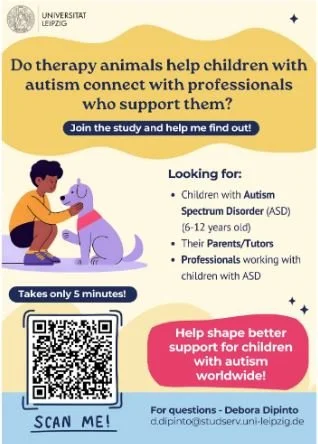
“Do therapy animals help children with autism connect with professionals who support them?” is the title of a study being run by a research student at the University of Leipzig. Participants are asked to fill out two surveys - one for the child (ages 6-12) and one for the parent - taking approximately 5 minutes each. Click on the link below to find out more or take part in the survey.
3. Support neurodivergent makers and businesses:
Whether you are looking for a stocking filler or a statement piece, every penny we spend makes a difference. Supporting neurodivergent makers, creators and businesses is a powerful way to advocate. Here are some of our favourite picks:
ARTHOUSE Unlimited
ARTHOUSE Unlimited is a charity that showcases the artistic talents and skills of adults who live with diverse learning and physical disabilities. Their beautiful creations truly reflect the diverse and open hearts they support - and their chocolate is divine!
Charlotte Crawford
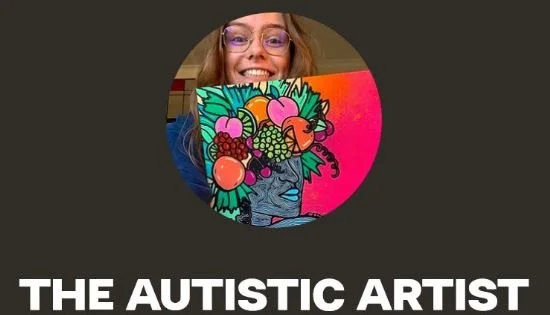
Berkshire based autistic artist Charlotte uses art as an important safety net when navigating the world and dealing with mental health difficulties.
Her stunning creations illustrate a different and powerful way of communicating the often deep and complex emotions of a neurodivergent world.
Neuthreads
Founded and run by Daisy Chain, a member of the Autism Alliance UK, Neuthreads is a brand-new hub for sustainable fashion, creativity, and opportunity.
Garments destined for landfill are reimagined into beautiful, high-quality clothing, all while creating training, volunteering, and employment opportunities for autistic and neurodivergent individuals.
These stunning garments have to be seen and worn!
Tell us what you think
Autism diagnosis and unmet need
With 227,000 people facing an average waiting time of over 16 months for an autism assessment and diagnosis, the system is not working. Even with an autism diagnosis, most often autistic children, young people and adults’ needs are not recognised or met. These might be sensory needs, different ways of communicating, flexibility around processes and rules, or recognition of specialist knowledge and skills.
We believe our system of public services (education, healthcare, employment, justice) should meet needs as the basis for better outcomes. Not ‘unreasonable demands’, but basic needs, which if met enable people to function, participate and contribute. Needs have changed during the past twenty years - not just amongst autistic people, but also across other types of neurodivergence, and mental health - and policy needs to catch up with reality.
Needs-led public services are not far away: it is about thinking differently, not ‘adding more’. Many inspirational people in local charities and services are already showing how different approaches can yield transformational results. But having positive values and beliefs, based on respect, curiosity and empathy, is fundamental: a needs-led approach means moving past our prevailing culture of stigma, distrust and disbelief.
In 2026 we will be looking at this issue in depth and making recommendations for change.
To support this work, we’d love to hear your thoughts on how the UK could enable a needs-led system of public services.
A final word
We hope you enjoyed reading this newsletter. We’ll send out a new edition every quarter, keeping you updated on our work, but if you’d prefer not to hear from us again, you can unsubscribe here.
If you know someone who supports our vision for a world where autistic people can thrive, you can share our supporter page with them so they can receive the newsletter too.
