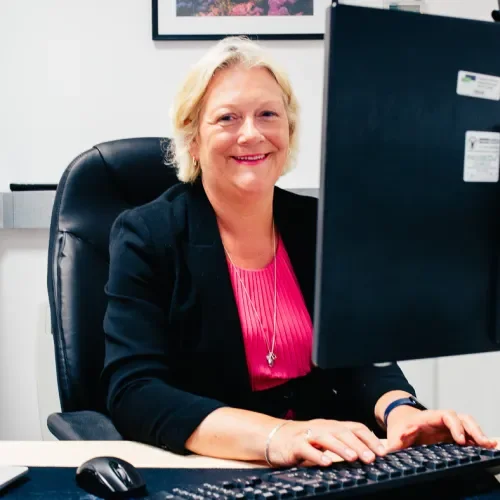
CEO Spotlight on Gill Bryant, CEO EveryStory
Tell us about yourself - how have you got to where you are now?
I’ve worked in the sector 30 years now. I started off as a support worker – I didn’t really want to be a support worker at that point, it was an accident, like these things quite often are!
I had planned on going to university to train to be a teacher, but I ended up doing some shifts in a nursing home and decided to take a gap year. I then started working with people with dementia and then people with learning disabilities. And that gap year turned into a second gap year. Then I decided, actually I want to become a nurse – I started my degree and then I fell pregnant. So I ended up starting my family and then went on to work in the voluntary sector and also did a degree in housing.
As part of the degree I did a module in homelessness and housing law and I did my dissertation around worklessness and the impact that had on housing because that really, really interested me. There are sometimes generations and generations of people trapped in a cycle of worklessness and quite often when you work with people who are homeless it all links together with health and social care because you work with the same groups of people, people who have disabilities, or are autistic, and they can often come from the same vulnerable backgrounds. So I focused a lot on homelessness and housing law specifically was my speciality. I ended up working for a homeless charity for nearly 15 years which I loved. I’m still very passionate about homelessness.
I knew by my early 30s that my long-term goal was to become a CEO. And I set myself a goal of doing that before I was 50. All the while I was raising three children as a single mum, doing my degree, working and training as a Practice Learning Facilitator – I’ve always kept myself very busy!
Around 2010 I set up the first ever social prescribing service in the country, down in East Kent, in conjunction with the local NHS trust. I went on to do some work with Shaw Trust and then the Prince’s Trust – working with them on their biggest ever contract to get more young people into work with the NHS – just as COVID hit. At the same time, about a year before that, I had started watching Aspens, because I loved what they were doing and I really wanted to get back to working with autistic people and people with learning disabilities. I’d only been with the Prince’s Trust for two months when I got a phone call about the Director of Operations role at Aspens – I had always wanted to work for the Prince’s Trust but when I was offered the job at Aspens I couldn’t refuse!
I worked for Aspens for 3 years before I learned about the CEO vacancy at EveryStory. I got very sick in 2023 and I think everybody thought I would just focus on getting better but I was then approached about this job and it came at a time when I literally had my head in the toilet finishing round four of chemotherapy - I was so sick and got an e-mail to say we think you'd be perfect for this role. And it was my other half actually who said you’d kick yourself if you didn’t reply – it’s everything you ever wanted. So I did. And I had my interview three days after round six of chemotherapy, which was when I was at my sickest. And I got the job.
It was mad, really mad. But I’m so pleased that I did it. I’m pleased I found the kind of resilience to say I’ve set myself this goal of becoming a CEO and I’m going to stick to it (and actually I beat it by 3 years – the goal was to become a CEO by the time I was 50!). And it's part of the reason why I work in this sector because actually I see people every day who face much tougher goals than that. This was a short period in my life but I see people who have to deal with really hard things every day and they get on with it. So that's what brought me to EveryStory - it was a goal set many years ago that I was determined to one day become a CEO. For the right reasons, I think, because I've learned so much in my career that I felt I should become that person who gives something back.
What is the best thing about being the CEO of EveryStory?
The best thing is the people. And I think that's what you'll probably hear from most CEOs that you'll talk to, but it is the people. The staff and the people we support. My favourite days have always been whenever I have anything to do with the people we support. One minute I could be here trying to negotiate for a local authority to give us the money to do what we have to do on a daily basis, and then within half an hour, I’m visiting someone we support, doing karaoke and singing ABBA really badly because they don't know that I'm banned from singing in public!
What is the hardest thing about being the CEO of EveryStory?
The hardest thing is that we're in a sector that nobody invests in and – it sounds extreme I know - but it's soul destroying. You are constantly battling to get investment from the local authorities to a level to just cover your costs. And they don't even do that anymore - we're contractually obliged to pay London living wage but we don't get enough money to cover that in the uplifts now. We're looking at income diversification to try and bring in money from other places, but you can't pay for your statutory services with that. So we're looking at alternative delivery models that we can fund to be able to sustain our services in the long term. But it’s very frustrating that we're not valued. That's the worst part – we are not valued for what we do even though we deliver such an important service to the community - families rely on us so much to deliver good quality services.
How was it making the jump from Director of Operations (Aspens) to CEO?
To be honest, I was so ready for it, so it didn’t feel like a massive jump. When I was appointed I had just finished chemo, had surgery to go through and was also doing 10 rounds of radiotherapy at that time, so you’d think I’d be absolutely dead on my feet by the end, but I wasn’t – I was so excited about taking on a new challenge that I just focused on getting stuck in. I’d been writing notes for weeks and planning for what I was going to do and the strategy - I couldn’t wait to get started. I just wanted some normality too, to just go to work every day.
One thing I did notice, probably around week 3, is that being a CEO can be a lonely job. Especially in a new organisation when you come in, you have to make a lot of big decisions around structure and strategy, make cost savings, make new appointments etc. So I’ve really learned that it is so important to have a good CEO network around me so we can support each other, whether that’s other Alliance members, board members or another group I’m part of, which is for people in their first CEO role.
Probably related to that I decided I wanted to become a trustee, to be able to offer something back to others, as people did for me when I first started. And I found I have really liked being a trustee and it’s really energised me. Initially I become a trustee for a small woodland charity, and when that finished I applied for two trustee roles, thinking I would get only one of them and ended up with both of them! One is homeless charity in Greenwich, and the other is Hft, a very large charity supporting people with learning disabilities to live with independence and choice. I've always remained very passionate about homelessness so they are perfect charities for me to support. I really wanted to give back to our community. You can probably tell that I’m the sort of person who needs to be doing something all the time. I’m not very good at sitting still! So I lead a busy life, but when I get a spare hour I do appreciate it!
What's your 'why'? Why do you do what you do?
There are two things really. I believe that everybody in life should be given the same opportunities despite what our background is. People aren't always given those opportunities because people see barriers, and people should be given the opportunity for those barriers to be removed. So if you look at the people we support, sometimes people will see the disability before the person and think that they can't do something, but actually that's not necessarily true and everybody should be given the opportunity to try. So that's what I believe, that everybody should be given the chance to try - sometimes people are written off before they're even offered a chance to try. And that's what's driven me my whole career - that people should be given opportunities, whether they've got a physical disability or a learning disability, they're autistic or because they're homeless or because they've got a drug and alcohol problem or a mental health problem.
There’s also my brother – I have three siblings and we all spent our childhood being dragged round child psychologist after child psychologist, social worker after social worker, to try and find out what was ‘wrong’ with my brother because he was so ‘naughty’ and nobody could figure out why. Well, clearly he wasn’t ‘naughty’ and he badly needed some help and support, but what we as a family have been through I am determined that the families we work with should never have to go through. So that drives me to ensure that people can access help and people can see past those barriers – people are judged so unfairly from first appearances. So that is what drives me every day.
How do you measure success?
I can sum it up very quickly, and it sounds a bit of a cliché but, I measure success by smiles. To me, if I walk around the houses of the people we support and our services and people are smiling, then I'm happy that we're doing what we're supposed to be doing. And with the families where they were not smiling before, but they smile now, that's good. That to me shows that we're doing something right. And it’s exactly the same with my staff too.
What has been a favourite moment of your career so far?
When I think about the best days I’ve ever had working, it's last year’s Christmas party when I watched 100 or so people who we support every day dancing and singing with our Chair there with them, with some of our commissioners in the corner dancing away as well and thinking - this is why we do what we do. I think back to when I was Aspens, working through all the lockdowns, it was hard going and then we had the Queen’s Jubilee and we managed to organise a party for 300 people, I just stood there watching everybody in their red, white and blue and thinking this is what it's all about.
It’s also the staff and their feedback, when they come into the office and say thank you for investing in us, for making this a nicer place to work – we got brilliant feedback from our staff conference last year that our staff feel included now, and listened to, which wasn’t happening before.
Do you have any advice for other women in leadership positions or with aspirations to be a leader?
I'd say stay focused, set yourself a goal, don't let the fact that you are female get in the way of anything. I was a single mum, I was a mum very young and I was determined that I was still going to have a career – I set myself a goal, I stuck with my goal, I remained very focused and I achieved it. When I talk to younger girls now, I say to them, remain very focused on what you want to achieve and don't feel blocked by what you might perceive as a barrier.
I went out and fought for everything I’ve got, nothing was given to me on a plate. I've worked hard to achieve everything - we get out of life what we put into it. Has it been tougher because I'm female? Yes, I think it has because I had to do it all on my own. I was a single mum. And do I love the fact that my children think I'm an amazing role model? Yes, I do. I think that to me is the biggest compliment. I've never wanted to impress anybody in my life, but if I've impressed my own children, I'm pleased with that. That's enough for me.
Thank you Gill for sharing your story with us!
July 2026
To read all our CEO spotlight interviews click here.