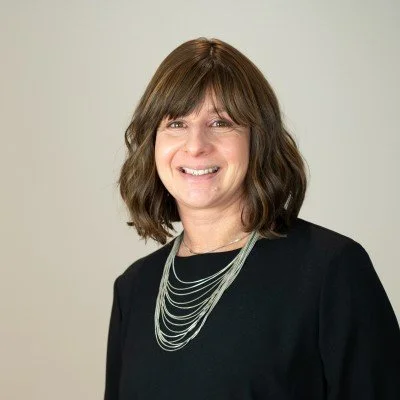
CEO Spotlight on Naomi Dickson, CEO Norwood
Tell us about yourself - how have you got to where you are now?
I’ve been Chief Executive of Norwood for three years. Norwood was my aspirational job for many, many years. I was so excited to get the job, but I feel like I didn’t really know or understand the learning curve that I was going to have to undertake when I got there!
I spent many years at a domestic abuse charity, eventually becoming the CEO. So I have been working on systemic change for a while and in my final year there I worked on the Domestic Abuse Act with various peers and MPs, where there was obviously a lot of in-depth knowledge and understanding needed. When I got to Norwood my knowledge of social care was in no way as in-depth as that, but I did come with the knowledge of how to lead a charity.
The actual subject matter knowledge is something I’ve had to learn from other people, but I’ve been very lucky to find lots of amazing peers across the sector, including in the Autism Alliance and VODG (which I’m also a trustee of). It has been very humbling and extremely interesting as well. It was really good for me to go through that learning – it really made my brain work because social care is complicated and it’s hard, and it’s built on years and years of experience and legislation and lived experience, which unless you really get in the weeds, it's very hard to understand.
I think one of my best ways of learning is going to our buildings and meeting the people we support, talking to the managers and just asking them, what are the hard bits, what is working well, what can we do better? And also talking to other CEOs who are doing it, who have done it longer than me. I soon lost the idea of trying to look like an expert and just found (and still find) myself very unafraid to ask questions or come out of a meeting and go away and research things afterwards.
What is the best thing about being the CEO of Norwood?
The best part of my job is seeing the people we support. Because that is the main part of what we do – it’s not in the admin office or in the boardroom or looking at a spreadsheet – it’s actually going to see somebody and seeing how we’re enabling them to live a fulfilled life where they have agency and the ability to ask for what they want, seeing that they've got amazing support workers who are well trained and well supported and able to be loyal to an organisation because they know that we look after them really well. And where there is a family surrounding that person who are able to advocate for them in a constructive way. That’s the best part of the job because that’s the why of it all, isn’t it?
What is the hardest thing about being the CEO of Norwood?
There's a huge need out there and the resourcing is just tough. After I left the world of domestic abuse, I thought, nowhere can possibly be harder than domestic abuse because there's no money and the subject matter is so challenging and upsetting. And then I came to social care and there's less money and there’s still a lot of work to be done to see parity between social care and the NHS. It is even less visible and there is a huge need to increase awareness and understanding of the needs of neurodivergent people. So it’s difficult for people who don’t know social care or know autism, to understand the need for it. And it also means that resourcing is really, really difficult. We have to battle with 56 local authorities every single year to make sure that we're getting a fair fee from them. And if we don't get that fair fee, we've got really difficult decisions to make.
So the hardest part of the job is when we have to make choices about who we can support and how we support them and for how long. But I also have got a very clear strategy and I've got a very, very good experienced senior team and a very supportive board. So whilst decisions like that can keep me awake at night, I also know that they're rooted in a really solid process.
What's your 'why'? Why do you do what you do?
The ability to be able to make change that affects people's lives when they've experienced a disadvantage - and maybe that's because something bad has happened to them or maybe because society just doesn't understand their needs - is a huge, enormous privilege every single day. That is the bit that motivates me. And that's why I go to visit people in the services, that's why I enjoy talking to the parents. And actually just sitting with those parents and ask what's working, what's not working? And they say, it's made an enormous difference to me here but actually, if you also did this, that would be even better. And then being able then to take all that experience and knowledge that I've soaked up and then go to government and to local constituency MPs and to write in a consultation to a paper, and to be able to help change systems because of what I've absorbed from the organisation and the people we support. That is the reason I do this, because I think, yes, it's a huge privilege to be able run support services, but to be able to change a system for all the people that need it is just absolutely epic.
How do you measure success?
There's not one single moment in time but knowing that it is a team effort and being able to look back and see the impact on all the different people. Whether that's somebody who works for Norwood and they're having a more positive experience and they're staying for longer, because we've, for example, increased training or pay for support workers, or whether that's to do with the fact that our services are more focused and polished and are now reaching the right people. All of those are success measures. And for me, it's not about me! It is about the organisation and the team I've got around me, whether that's my senior team, all the 660 people who work for Norwood, my Board, all my stakeholders, it's a great team effort. And even things like having a family voice loud and clear in my ear mean that I've got a better chance of Norwood being a successful organisation, which helps more people to fulfil their potential.
What has been a favourite moment of your career so far?
It's all hindsight, isn't it? When I started being CEO at Jewish Women's Aid, there were loads of highlight moments. But actually when I left, being able to look back and think - the service is doing exactly what it should be doing for the Jewish women who need it and the organisation has got a really clear place in the sector - that was a wonderful moment. And that wasn't just built by me, it was built collaboratively. And the same with Norwood - being able now to look back and think, I've been here for just over three years and in that time, we have managed to achieve all of these different things and support all of these different people and being able to celebrate that with my team – they are the moments that sparkle.
Then also if we have a festive celebration for the people we support and there's a big party and we're all dancing together on the dance floor, and we're having kind of a Jewish cultural moment. I've got my team dancing with the people we support, whether they're in wheelchairs or walking on their own, whether they're verbal or non-verbal, it's just the greatest feeling and it's extremely inclusive. And that is one of those moments that you just think - this is what it's all about.
I also think women are not very good at actually celebrating their own successes, so I try really hard with my team when there's a clear point in a project or at the end of it, just to sit down and say - well done everybody, this is really important work and I want to congratulate you all and reflect on what we’ve achieved.
How do you as a leader promote a culture of inclusivity in the workplace?
I think it's about the team understanding what inclusivity is. It's about having lived experience in every part of the organisation and making sure that we're able to hear what people are saying to us and do our best to accommodate that. We use our internal resources and colleagues, like Naomi Phillips, who's our autism expert, to come and train our internal teams to make sure that their processes and systems are as inclusive as possible.
But inclusivity is about lots of different things as well as neuroinclusivity. We're a Jewish organisation, but welcome colleagues from many faiths, so making sure that we're able to allow people to practise their faith where appropriate is really, really important - not just Jewish colleagues, but for example, people observing Ramadan or praying during the day or with various food preferences throughout the year.
In 2020 you were named as one of the BBC's 100 Women of the Year. Do you have any advice for other women in leadership positions or with aspirations to be a leader?
I actually thought it was a hoax when I got the email, I thought it was spam! It’s not the kind of thing you apply for, and it’s 100 women in the world. So I was quite amazed and it was an enormous privilege. And it did make me reflect a bit on leadership and think back to what I have achieved – I suppose a bit of ‘feel the fear and do it anyway’! For example when I started as CEO at Jewish Women’s Aid or at Norwood, you just have to drop your comfort zone, dive straight in and get on with it. Be prepared to make mistakes, ask for a lot of advice and have a strong support network around you if possible. My husband and family are amazing; I have a coach and a team of mentors and an amazing Chair. Be prepared to put the hours in where you can. And I think a massive dose of humility really helps!